

Esoterica and Godlessness
We began this mini-series with a 3-part study of esoteric genealogy in Matthew and Luke, and added a fourth related post on esoteric Rosicrucian Lore: The Chymical Wedding of Christian Rosenkreutz. The 4 posts are here:
Why are there 2 Completely Different Bloodlines of Joseph in Matthew and Luke?
(2/2) Why are there 2 Completely Different Bloodlines of Joseph in Matthew and Luke?
(Conclusion) Why are there 2 Completely Different Bloodlines of Joseph in Matthew and Luke?
Reflections as the Summer Comes to an End: The Secular Roots of Esoterica
This post is a title page.
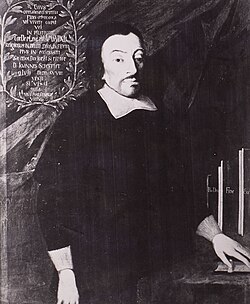
Johann Scheffler (Angelus Silesius), Catholic priest, physician, mystic and religious poet (wiki)
Who wrote The Cherubic Wanderer? Is it the same writer who said “A rose is without a why, it blooms because it blooms”? What message does “The Cherubic Wanderer” convey?
Angelus Silesius (born Johannes/Johann Scheffler, 1624–1677), was a German mystic, poet, physician, and later Catholic priest.
He originally published the work in 1657 as Geistreiche Sinn- und Schlussreime (“Spiritual Epigrams and Couplets”); it became widely known under the later title Cherubinischer Wandersmann (The Cherubic Wanderer), especially in the expanded 1674 edition. The collection consists of roughly 1,400 short rhymed epigrams (mostly Alexandrine couplets) of Christian mysticism.
The famous lines about the rose appear in The Cherubinic Wanderer (often rendered as: “The rose is without why; it blooms because it blooms. / It pays no attention to itself, nor asks whether anyone sees it”). This is one of Silesius’s best-known verses and is frequently discussed in mystical and philosophical contexts (including by Heidegger).
The work’s central message is a radical Christian mysticism of detachment, paradox, and union (or even identity) of the soul with God. Key themes include:
- The soul as a “wanderer” or pilgrim seeking God through intellect and contemplation (“cherubic” evokes the cherubim as angels of knowledge/reason, in contrast to the more affective seraphim).
- Self-abandonment (Gelassenheit), annihilation of the ego/will, and becoming “nothing” so that God may fill the soul: the true self is grounded in the divine.
- Paradoxical and apophatic (negative) theology: God as beyond all attributes, time, place, or concepts—described as Nothingness, a circle whose center is everywhere and circumference nowhere, etc.—while also immanent in creation.
- Living “without why,” like the rose: pure, spontaneous being and blooming free of self-interest, calculation, or external purpose, mirroring divine freedom and the soul’s proper state.
- Eternal unity: the soul’s core is identical with the divine ground; creation participates in God’s eternity; themes of humility, love, death to self, rebirth, and deification.
Influenced by figures such as Jakob Böhme, Meister Eckhart, and the broader German mystical tradition, the epigrams use concise, often startling paradoxes to point beyond rational thought toward direct contemplative experience of God. They emphasize inward stillness over frantic effort and present a vision of harmony in which the human soul, stripped of worldly attachments, realizes its deepest identity with the divine.
The book remains a classic of Western mystical literature for its poetic intensity, intellectual depth, and invitation to contemplative union.
In a letter to Paccius dated January 28, 1695, Gottfried Wilhelm Leibniz wrote (roughly translated): “With every mystic there are a few places that are extraordinarily clever [or bold], full of difficult metaphors and virtually inclining to Godlessness [or almost to godlessness], just as I have sometimes seen in the German—otherwise beautiful—poems of a certain man who is called Johannes Angelus Silesius.”
He acknowledges the beauty of Silesius’s poetry while criticizing its daring, paradoxical style and its tendency (in his rationalist view) toward something close to speculative atheism or godlessness, especially in light of Leibniz’s own principle of sufficient reason (“nothing is without a why”), which contrasts with Silesius’s rose that blooms “without why.”
Martin Heidegger quotes this exact remark by Leibniz in his 1955–56 lectures The Principle of Reason (Der Satz vom Grund), while discussing Silesius’s famous rose epigram as a mystical counterpoint to the demand for reasons. Heidegger himself engages the poetry more sympathetically as pointing toward a mode of being prior to or outside calculative thinking.
Jacques Derrida also engages Silesius extensively (notably in Sauf le nom / On the Name), often in dialogue with Heidegger, and references Leibniz’s comment on the “almost-godlessness” or “presque-athéisme.” Derrida explores the apophatic/mystical boldness and its relation to negative theology, but the original characterization of the poetry as beautiful yet difficult and tending toward godlessness comes from Leibniz.
Analysis
We spoke previously of how Leibniz thought entities reflect reason, and so a right angle triangle is going to appear very differently to a mentally challenged person who does not perceive triangles as a distinct category, vs a child learning her shapes, vs a teenager in geometry class, vs a geometry professor researching the history of the Pythagorean theorem. “To be” means to stand in relation to a ground, be supported by a reason: is “Godly” in the figurative sense.
By contrast, the ambiguities in Silesius’ writings such as his difficult metaphors are characterized by an opposite maxim to Leibniz’s principle of sufficient reason, Sliesius’ a rose is without a why. It blooms because it blooms.
This is related to the via negative or negative theology, describing something like God by saying what God isn’t.
We say there was an original language that then got confused into many languages at the Tower of Babel, and so this original hidden language is the bridge that allows us to go from one modern language to another. We can’t say anything about this “ur-language,” only what it isn’t (not-English/not French, etc). Negative theology denies even our monolingualism, that before we translate our native tongue into something meaningful for us it’s just gibberish noise that babies hear.
Negative theology is fundamentally unclear, addressing God only negatively (not finite, not …). Traditional theology wants to translate allegories and metaphors about God into easily grasped rational concepts, like what we do with Plato’s aviary or allegory of the cave – whereas the via negativa or way of negation shows allegories or metaphor are understood just by translating them into other allegories and metaphors in a process of infinite deferral. For example, our original word for the “soul/spirit” was the metaphor “wind.” There is extensive cross translation and connectivity between the various sensory areas of the brain and it emerges as mirroring, like how the facial expressions of the mother are mirrored by the baby.
And so, the godless figurative metaphors/allegories of the mystics are contrasted with the figurative language translated into clear concepts (godliness) of the philosopher: but again, there is nothing superstitious going on here, just thinkers using language about the divine to talk about purely secular philosophical matters. As Heidegger, who uses all kinds of divinity concepts said in the 1946 Anaximander essay, “Faith has no place in thought (280).”