



(2/2) Celebrating New Teachers: The Interview
Last Time:
Celebrating New Teachers: Education and Metaphysics with Squaring and Circling
Now the conclusion:
I’m still on vacation here at the blog, but I wanted to do a part 2 for the last post.
While last time I talked about some ideas for new teachers, I thought I might conclude this two-part series with some elementary school interviewing strategies. Have you ever gone on a teaching interview and have no idea why you didn’t get the job? As a veteran of many interviews, and many post-interview-sessions requesting feedback from the principal, I think one of the best things you can do is have a strategy going in. While you can’t predict what the administrator will ask you, there are some general areas that will probably be addressed.
As I said last time, you’re going to want to be thinking about planning (short, middle, long-term), assessment/evaluation (know the difference between the two), classroom management (eg., a class money system), differentiation (for higher and lower level students), and instructional strategies (e.g., HERE). Have a unit you have written implementing these elements that you can leave with the administrator to look at after the interview. A class website is also a crucial information and communication tool, so even if you are new, you should still have a sample site already built.
Literacy and Numeracy will be big parts of your student’s day, so I’ll talk about some best practices for literacy here. The core idea is called Balanced Literacy, and here are some components that might be involved at the elementary level.
Two of the perennial favorites in literacy instruction for teachers are Four Block literacy teaching and First Steps literacy teaching.
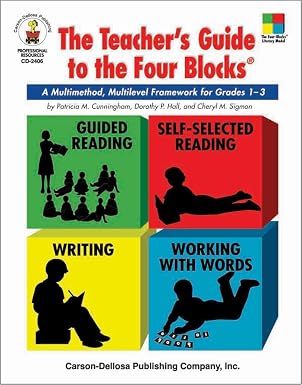
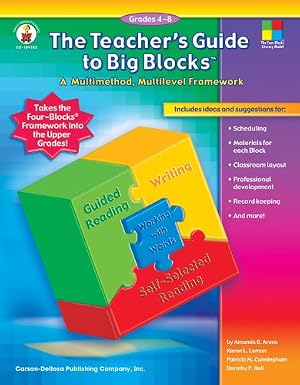
The 4-Blocks (or Four Blocks) Literacy Model is a balanced literacy framework for teaching reading and writing, primarily designed for primary grades (typically grades 1–3, with adaptations like Building Blocks for kindergarten and Big Blocks for grades 4–6). It utilizes the fourfold thinking I noted last time to organize its 4 aspects.
It was developed by Patricia Cunningham, Dorothy Hall, and others in the 1990s. The model divides daily language arts instruction into four equal blocks (usually 30–40 minutes each, totaling about 2–2.5 hours), providing varied approaches to literacy so children with different learning styles and ability levels can succeed without traditional ability grouping.
The Four Blocks
- Guided Reading
Teachers work with small groups of students on leveled texts that are slightly challenging. The focus is on comprehension strategies, reading progressively harder material, fluency, and teaching students how to read in a supported setting. Groups are flexible and change based on needs and observations.
- Self-Selected Reading (also called Independent Reading or Reader’s Workshop)
Students choose their own books (from a well-stocked classroom library) and read independently. This block builds motivation, stamina, and a love of reading. Teachers may confer with individuals, and students often respond to their reading (e.g., through sharing or simple responses). It is multilevel by design.
- Working with Words
This block emphasizes phonics, spelling, and word study. Activities often include Making Words (using letter tiles to build words), word walls for high-frequency words, phonics lessons, and pattern recognition to help students decode and spell independently. It supports both reading and writing skills.
- Writing (Writer’s Workshop)
Students engage in the writing process. It typically starts with a short teacher mini-lesson or modeled writing, followed by independent writing time and sharing. Students write on self-selected topics, learning conventions, organization, and the joy of authorship.
Key Features and Philosophy
- Balanced and Multilevel: Combines elements of whole language, phonics, and workshop approaches rather than relying on a single method.
- Daily and Consistent: All four blocks occur most days for equity and reinforcement.
- Differentiation: Supports diverse learners, including those with disabilities, by offering multiple entry points to literacy.
- Adaptations:
- Building Blocks (Kindergarten) — Adjusted for younger students.
- Big Blocks (Upper elementary) — Modified for older grades with more emphasis on comprehension and content-area reading.
The framework has been popular for its practicality and inclusivity, though some critics have noted its roots in balanced literacy approaches that may under-emphasize explicit systematic phonics in certain implementations.
It remains influential in many elementary classrooms as a structure for organizing comprehensive literacy instruction. As I talked about last time, its fourfold nature is optimal for helping students orient themselves to the part of the day they are in. Teachers often supplement it with additional assessments (like DRA) and targeted interventions as needed.
The Four Block Model is research-based and is helpfully divided into Four Blocks which aligns with the 4-fold thinking model I championed in the previous post. In the teaching job interview, you might want to go in depth about one of the blocks. For example, an important one is Guided Reading, and one important aspect of this could be Literature Circles, which is more elaborate in the later grades but built out of four-fold thinking.
Traditional literature circle roles for grades 3-6 typically come from established models (such as those popularized by Harvey Daniels and resources like Read Write Think). These roles help structure small-group discussions (usually 4-6 students) around a shared book, ensuring every student has a clear job that supports comprehension, discussion, and accountability.
Roles rotate with each meeting or book section so students experience different responsibilities. Groups often meet weekly after reading an assigned portion of the book independently. Here are the most frequently used roles (grades 4-6) in elementary literature circles:
- Discussion Director (or Questioner/Facilitator)
Leads the group discussion. Prepares 4–8 thoughtful questions (who, what, why, when, where, how, and “what if” types) to spark conversation about key events, characters, predictions, or themes. Ensures everyone participates and keeps the discussion on track.
- Literary Luminary (or Passage Picker/Spotlight Seeker). Selects important, interesting, puzzling, or well-written passages to read aloud. Explains why they chose each one and facilitates discussion around them. Helps the group focus on vivid language, turning points, or emotional moments.
- Vocabulary Enricher (or Word Wizard)
Identifies 4–6 challenging, interesting, or important words from the reading. Provides definitions, pronunciations, and context sentences. Discusses how the words enhance the story or why the author chose them. May use a dictionary or glossary.
- Summarizer (or Super Summarizer)
Prepares a concise summary of the assigned reading (key events, main ideas, without too many details). Helps the group review what happened before diving into deeper discussion. This role can be challenging for younger students, so modeling is helpful.
- Connector (or Clever Connector)
Finds connections between the book and the real world, other books, current events, personal experiences, or other subjects. Shares these links to help the group relate to the text on a deeper level.
- Checker (or Investigator/Illustrator/Artist)
Often serves as a support role: checks that everyone completed the reading, verifies page numbers, or takes notes on the discussion. In some versions, this becomes the Illustrator/Artful Artist, who draws a scene, character, or symbol and explains its significance.
The number of roles can be as varied as your imagination, but teachers often start with a simple set of 4 roles (Discussion Director, Literary Luminary, Vocabulary Enricher, Checker) for younger or less experienced groups and expand as students gain proficiency/confidence.
Other popular additions or alternatives include Predictor, Investigator (researching background info), or Theme Watcher.
Tips for implementation:
- Provide role sheets or job cards with prompts and space for notes.
- Model each role explicitly with a read-aloud or familiar text.
- Start with short, engaging books and clear reading assignments.
- Emphasize that roles support discussion rather than replace natural conversation; over time, many groups phase out rigid roles as discussions become more fluid.
These roles promote active reading, speaking/listening skills, and collaboration while making literature discussions more equitable and engaging for elementary students. Variations exist across classrooms, but the ones above represent the most traditional and widely recommended framework.
For those teachers who do not use Literature Circle as guided reading, here are some strategies for bridging the gap:
- Increase teacher involvement: Instead of acting as a facilitator/observer, the teacher actively coaches during reading and discussion—prompting strategies, modeling think-alouds, and providing real-time feedback on decoding, fluency, or comprehension, just like in Guided Reading.
- Use leveled texts selected by the teacher: Assign books or excerpts at the group’s instructional level (slightly challenging) rather than relying heavily on student choice. This aligns with Guided Reading principles.
- Incorporate explicit skill instruction: Teach and practice specific reading strategies (e.g., predicting, questioning, summarizing) before or during sessions. Use mini-lessons, then apply them immediately in the group. Roles (e.g., Questioner, Summarizer) can support targeted skills but with more teacher oversight.
- Structure the session like Guided Reading: Include before-reading (preview/vocabulary), during-reading (supported individual or choral reading with prompts), and after-reading (guided discussion) phases. The teacher can rotate between groups or focus on one at a time.
- Start with more support and fade it: Early in the year or for struggling readers, run highly teacher-led “Literature Circles.” Gradually release responsibility as students gain independence. Some teachers use this as a bridge from Guided Reading to fuller student-led circles
Another important aspect of balanced literacy is identifying where the student is developmentally so you can teach intentionally to move them along the developmental continuum. A great resource for this in reading is The Developmental Reading Assessment (DRA) which will look different at the primary and junior levels.
The Developmental Reading Assessment (DRA), now in its third edition (DRA3), is a standardized administered reading assessment used primarily in elementary schools (and sometimes up to grade 8). It helps teachers determine a student’s independent or instructional reading level, observe key reading behaviors, and track growth over time.
Teachers conduct sessions where students read leveled books or passages (fiction and nonfiction). Key components typically include:
- Oral reading fluency — Accuracy, rate, phrasing, and expression.
- Comprehension — Retelling, summarizing, answering questions, and sometimes written responses or reflections.
- Reading engagement and other behaviors (e.g., phonemic awareness, phonics, vocabulary in early levels).
- Accuracy threshold — Students generally need high accuracy (often ~90% or better) plus adequate comprehension to achieve a specific level.
Levels range from A/1 (beginning readers) to 80 (advanced/middle school level). Multiple levels often fall within a single grade, and expectations increase with grade level. The assessment is criterion-referenced and helps match students to “just-right” books while informing instruction and grouping.
It is typically given 1–3 times per year (e.g., fall, winter, spring) as a benchmark or progress-monitoring tool, especially for struggling readers.
Primary vs. Junior Levels
“Primary” generally refers to grades K–3 (or sometimes K–2), while “junior” (or intermediate) refers to grades 4–6 (sometimes extending to 8). The core DRA framework is the same across levels, but administration, texts, and emphases adapt to developmental stages.
Primary Levels (K–3):
- Focus heavily on foundational skills: phonemic awareness, phonics/decoding, basic sight words, simple retelling, and early fluency.
- Shorter, more predictable texts with strong picture support in lower levels (A–20 or so).
- More emphasis on oral reading, running records, and teacher observation of early behaviors.
- Commonly used for all students in these grades as a primary benchmarking tool.
- Examples of typical end-of-year benchmarks (approximate; varies by district): Kindergarten ~1–4/8, Grade 1 ~3–16/18, Grade 2 ~18–28, Grade 3 ~30–38.
Junior/Intermediate Levels (Grades 4+):
- Greater emphasis on comprehension, vocabulary in context, inferencing, summarizing, and responding to more complex texts (longer passages, chapter-like selections, increased nonfiction).
- Fluency remains important but shifts toward prosody and sustaining reading stamina.
- Texts have less picture support, more dense content, and higher conceptual demands.
- Often used selectively (e.g., for students below benchmark on other screenings like i-Ready) rather than universally, as many districts shift to other tools (e.g., CASI in some regions) for on-level junior students.
- Higher levels (40–80) assess more advanced skills like analyzing themes, author’s purpose, or making connections.
- Administration may take longer due to text length; responses can include more written components.
Key Differences in Practice:
- Text complexity and length increase significantly.
- Comprehension demands shift from basic retelling to deeper analysis.
- Frequency of use is typically higher and more routine in primary grades.
- Scoring rubrics and observation guides adapt to age-appropriate behaviors (DRA2/DRA3 materials include differentiated components).
DRA is valued for its authentic, observational nature but can be time-intensive for teachers. Districts may pair it with other assessments for a fuller picture. Specific benchmarks, administration details, and exact cutoffs can vary by district, publisher edition (e.g., DRA2 vs. DRA3), and state/province.
As with reading, you need to establish where a student’s writing is developmentally so you can move them along. Four Block has a wonderful writing program, but another I have used with success is First Steps Writing.
The First Steps Writing Continuum and Resource Books are part of the First Steps Literacy program, originally developed in the 1990s by the Education Department of Western Australia. This is a comprehensive, research-based framework for teaching and assessing literacy (originally covering Reading, Writing, Spelling, and Oral Language, with later additions like Viewing).
It is widely used in Australia and has been adopted or influenced programs in other countries (e.g., parts of Canada, Ireland, and elsewhere). The approach links assessment directly to teaching through developmental continua and practical teaching resources.
The Writing Developmental Continuum:
This is a diagnostic assessment tool (often a separate book or document) that describes the typical phases or stages of writing development from early childhood through to proficient/adult levels. It helps teachers:
- Observe and map where individual students (or the class) are in their writing development.
- Identify strengths and next steps, even when a student’s skills span multiple phases.
- Plan targeted teaching without assuming uniform progress.
Typical phases in the First Steps Writing Continuum include indicators for behaviors such as:
- Beginning/Role Play — Scribbling, drawings with meaning, early attempts at writing-like marks.
- Experimental/Early — Using letter-like forms, random letters, beginning phonemic spelling, simple sentences.
- Transitional/Consolidating — Developing conventions, structure, genres, revising, and editing.
- Proficient/Advanced — Fluent, sophisticated writing across genres with strong control of conventions, style, and audience awareness.
Each phase includes:
- Global statements describing typical student behaviors.
- Specific indicators (e.g., what students do when composing, revising, or handling different text types).
- Major teaching emphases to help students move to the next phase.
It emphasizes that development is not strictly linear and that students can be at different phases for different aspects of writing.
The Writing Resource Book
This companion book provides practical teaching strategies, activities, and instructional procedures to support students at various points on the continuum. Key features include
- Explicit teaching of writing processes (planning, drafting, revising, editing, publishing).
- Guidance on teaching various genres/text types (narratives, reports, procedures, explanations, persuasive writing, etc.).
- Strategies for modeling, shared writing, guided writing, and independent writing.
- Ideas for linking reading and writing, developing conventions (spelling, grammar, punctuation), and conferencing with students.
- Classroom organization tips, assessment ideas, and ways to support diverse learners.
The Resource Book is designed to be used alongside the Continuum: teachers assess using the Continuum indicators, then turn to the Resource Book for targeted lessons and activities.
Overall Philosophy and Use
- Developmentally appropriate and differentiated — Recognizes that literacy skills develop unevenly.
- Assessment for teaching — The continua turn observation into actionable teaching focuses.
- Often used in conjunction with similar First Steps continua for Reading, Spelling, etc.
- Professional development was a big part of the original rollout, with teachers learning to use the tools through workshops.
Note: Materials were originally published by companies like Longman or Rigby and may exist in updated or revised editions depending on the region. Some versions are available as PDFs through education department sites.
This framework fits well with other balanced literacy approaches (such as the 4-Blocks model discussed previously) and tools like DRA, as it provides a developmental lens for writing instruction and progress monitoring in elementary/primary classrooms.
So, hopefully these are some helpful things to keep in mind for your next elementary teacher job interview!