



(Part 1) Blogging Through Martin Heidegger’s “Introduction to Metaphysics”
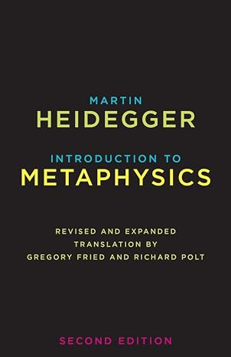
I will be blogging my way through Martin Heidegger’s Introduction to Metaphysics. This is one of the great works by an important 20th century philosopher.
Philosophically, metaphysics is the study of ultimate reality—the fundamental nature of existence, being, and the world.
While popular culture often treats it as “spooky physics” or quantum mysticism, the word originates from the ancient Greek meta (meaning “after” or “beyond”) and physika (meaning “physics” or “nature”). It originally referred to the books of Aristotle that were positioned after his treatises on physics. Over time, it became the name for the branch of philosophy that asks what the world is like beyond what can be observed through the sciences alone.
To understand its philosophical meaning, it helps to look at the core questions it asks, how it differs from physics, and why Immanuel Kant could apply it to morality.
Core Areas of Metaphysics
Philosophers generally divide metaphysics into several foundational inquiries:
- Ontology (The Study of Being): What does it mean for something to exist? What are the fundamental categories of things? For example: Do numbers exist in the same way trees do? Do properties (like the color redness) exist independently of red objects?
- Identity and Change: What makes an object the same object over time? If you replace every wooden plank on a ship one by one, is it still the same ship?
- Mind and Matter: What is the relationship between the conscious mind and the physical brain? Are they separate substances (dualism), or is the mind just a byproduct of physical matter (materialism)?
- Modality (Necessity and Possibility): What does it mean to say something “could have been” different? Are there alternative possible worlds?
Metaphysics vs. Physics
Physics is an empirical science. It relies on observation, measurement, and experimentation to discover the laws governing matter, energy, space, and time.
Metaphysics is a conceptual inquiry. It examines the hidden assumptions that physics takes for granted. For example:
- Physics measures how one particle affects another and maps the laws of cause and effect.
- Metaphysics asks: What actually is a cause? Is causation a real power inherent in objects, or is it just a habit of human perception?
- Physics uses mathematical equations to describe the structure of space and time.
- Metaphysics asks: Are space and time real entities, or are they just mental frameworks we use to organize our experiences?
Why Kant Wrote a “Metaphysics of Morals”
When Immanuel Kant wrote about a “metaphysics of morals,” he was using the term to mean an investigation into truths that are independent of sensory experience (a priori).
Kant argued that you cannot derive moral laws from physics or psychology. Physics tells us how the world is, but it can never tell us how the world ought to be. Therefore, a “metaphysics” of morals is a purely rational search for the foundational, necessary principles of duty and right action that apply to all rational beings, completely separate from physical biology, human desires, or the quantum world.
There are a whole slew of metaphysical structures that always go beyond the mere entity at hand we encounter, taking something “as” something else, such as einai (Being), choris (separate from), ton allown (the others), and kath auto (in itself). The addressing something as something, as a being, implies a separating and combining, because it addresses a being in terms of what is beyond it, namely its Being.
“Being,” that the entity is something “rather than” nothing, isn’t just a characteristic of the entity, but a comparison (“rather than”), hence belonging to the mind. Similarly, by “in itself” we mean what is ownmost and inherent rather than secondary and relational. The dog is also encountered “as” not-me, not a cat, etc. These various understandings of Being (the apohantic “as”) makes the encounter of the entity possible, what is seen in advance by the mind’s eye.
This follows the ancient notion of the mathematical, and so I don’t “see” 42 people when I enter the room, but rather a large belonging together group that allows me to count 42 of them if I so choose. Their belonging together groupness precedes their number, makes it possible. There is taking something as something else: e.g., mis-taking rustling dead leaves in the wind at my feet “as” a living thing. This basic stance toward the world is expressed with the apophantic linguistic structure.
The Beingness of an entity is born out of the unity of the person and thing. Generally, when we speak of Being we mean beingness (Parousia/presence), and so in elaborative comparison a mansion may be encountered as houseness incarnate, while houseness is merely present in the average house, and houseness is deficient in the dilapidated shack. These understanding of beingness are of course person dependent, and so the next person might experience the mansion in reverse as gaudy or the shack inverted as quaint. Similarly, a tourist might experience Niagara Falls as outreaching their expectations as a wonder of the world – “as” natureness incarnate, whereas the local commuter might experience it as background scenery, and the local resident as noise pollution. Of course, the next local resident may encounter it as even more wondrous than the first tourist due to the intimacy they have with it, and the next tourist may experience it as a let-down given their high expectations. Heidegger traces this understanding of beingness back to the Greeks and so in his essay on Aristotle’s physics notes the circling bird of prey as nature incarnate and the great statue as art-ness incarnate.
Special attention is given to Reason with the appearing of beings. The degree to which a being discloses itself is proportional to the quantity of reason of the person. Heidegger says in relation to Leibniz’s positing of the principle of ground/reason in Heidegger’s 1957 book The Principle of Reason, “in Leibniz’s sense, a ratio sufficiens, a sufficient reason, isn’t at all a ground capable of supporting a being so that it doesn’t straightaway fall into nothing. A sufficient reason is one that reaches and offers to beings that which puts them in the position of fulfilling their full essence, that is, perfectio. ” (PR, 71). So, a right-angle triangle is going to appear very differently to (1) A mentally challenged person who does not recognize triangles as a separate group of shapes vs (2) A child just learning her shapes vs (3) A teenager in Geometry class vs (4) A geometry professor researching the history of the Pythagorean theorem.
Similarly, in practical reason one’s ethical awareness is going to be very different for (1) A mentally challenged person or animal who are not responsible for their actions in the normal way vs (2) A child who is learning the difference between being a good and bad friend vs (3) The average adult who is responsible in the normal way vs (4) An Ethics Professor researching the holocaust. Schelling said only humans have the possibility of evil, which is the ability to sink below animals in terms of depravity.