



(Part 3) Blogging Through Martin Heidegger’s “Introduction to Metaphysics”
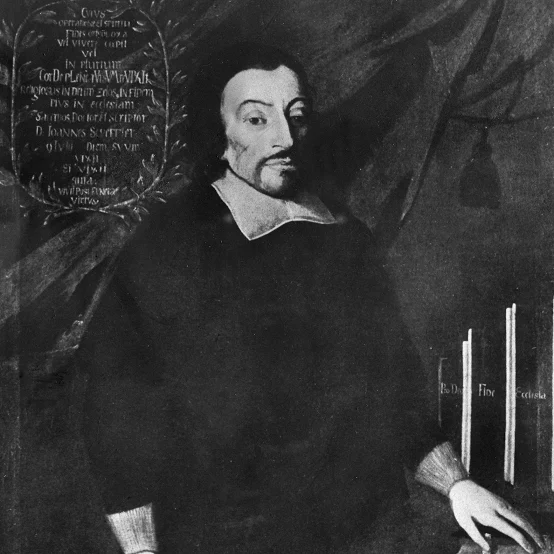
Angelus Silesius (wiki)
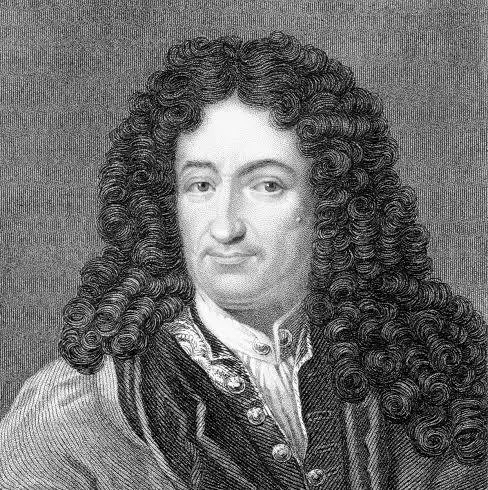
Gottfried Wilhelm Leibniz (wiki)
A famous two-line verse by Angelus Silesius from his work Cherubinischer Wandersmann is titled “Ohne Warum” (“Without Why”). The literal English translation is:
“The rose is without why; it blooms because it blooms, It pays no attention to itself, nor asks if it is seen”
Leibniz (1646–1716)—a contemporary of Silesius—called the mystic’s poetry “beautiful”, but “extraordinarily daring, full of difficult metaphors and inclined almost to godlessness” despite Silesius’s mysticism being contrary to Leibniz’s principium reddendae rationis sufficientis, the Principle of sufficient reason. Western philosophy is anchored by Leibniz’s Principle of Sufficient Reason: Nihil est sine ratione (Nothing is without a reason/why); or, “To be” implies connection to Reason (e.g., a cause, a purpose, a logical explanation, etc.). Heidegger clarifies this issue in his 1957 book The Principle of Reason,
“in Leibniz’s sense, a ratio sufficiens, a sufficient reason, isn’t at all a ground capable of supporting a being so that it doesn’t straightaway fall into nothing. A sufficient reason is one that reaches and offers to beings that which puts them in the position of fulfilling their full essence, that is, perfectio. ” (Heidegger, PR, 71)
Since Hobbes reason has tended to mean mathematical reckoning, though in general we speak of reason in terms of one’s capacity for understanding something. With Howard Gardner then we might contrast linguistic intelligence with musical intelligence, for instance.
So, a right-angle triangle is going to appear very differently to (1) A mentally challenged person who does not recognize triangles as a separate group of shapes vs (2) A child just learning her shapes vs (3) A teenager in Geometry class vs (4) A geometry professor researching the history of the Pythagorean theorem.
Similarly, in practical reason one’s ethical awareness is going to be very different for (1) A mentally challenged person or animal who are not responsible for their actions in the normal way vs (2) A child who is learning the difference between being a good and bad friend vs (3) The average adult who is responsible in the normal/usual way vs (4) An Ethics Professor researching the holocaust. Schelling said only humans have the possibility of evil, which is the ability to sink below animals in terms of depravity.
The basic elements of Leibniz’s system are monads, which are metaphysical points rather than mathematical/physical ones like quarks.
An entity perceived in the totality of its whats and hows, its selfhoods and otherness (if such a thought is even possible), is nothing other than how an entity appears in the eyes of an infinite intellect, God. Silesius, who practiced negative theology (via negativa), denies the divine mind is like a more powerful human mind but is something else entirely. God’s mind can simultaneously perceive with full attention the circle in the kitchen and the square in the garage, while a human mind can’t simultaneously perceive at the same time and in the same way a square circle with full attention to each. Silesius’ model contradicts the omniscience of God since there is no totality of traits of a phenomenon, and so professors in Academic journals churn out and endless supply of new takes on their subject matter.
To circle back then, The Latin word perceptio means “a taking, receiving, collecting, or gathering” in its literal sense. Figuratively, it translates to “perception, apprehension, or comprehension.” Coined by the Roman statesman and philosopher Cicero, the third-declension feminine noun is derived from the verb percipere (meaning “to seize, take entirely, or conceive”) combined with the action suffix -tiō. In every day Roman life, it referred to physical actions like harvesting crops or collecting/getting items (such as property or revenues). Figurative Meanings: Mentally, it meant grasping a concept or attaining awareness through the senses
Gottfried Wilhelm Leibniz explicitly applies perceptio (perception) to monads. In fact, it is one of the two core internal activities that define the very nature of a monad, alongside appetitus (appetition or desire). By analyzing his famous work The Monadology (1714), we can understand exactly how he reimagines this Latin concept.
How Leibniz Defines Perceptio:
Leibniz strips the word perceptio of its strictly human or biological connotations. In his Latin texts, he defines it mechanically and metaphysically as: “The expression of multiplicity in a unity” (multorum in uno expressio). Because monads are completely simple, indivisible, and immaterial, they have no physical parts. They are also “windowless,” meaning they cannot physically interact with or be altered by anything outside themselves. Instead, each monad acts as a living mirror of the universe. Perceptio is the internal state by which a monad represents, reflects, and holds the complexity of the entire external universe from its own specific point of view.
The Crucial Distinction: Perception vs. Apperception: Leibniz directly breaks away from René Descartes’ view that perception requires consciousness.
For Leibniz, all monads perceive, but not all monads are conscious. Reality is built out of these experiencing units, and the differences between a rock, a tree, a dog, and a human soul are simply differences in the clarity, distinctness, and consciousness of their perceptio.
In Leibniz’s metaphysics, appetition (appetitus) is the engine of the monad. If perceptio is the internal snapshot of the universe at any given moment, appetitus is the internal drive, tension, or desire that continuously transitions the monad from its current snapshot to the next.
Because monads are entirely self-contained and “windowless,” they cannot be altered or moved by external forces. Change must come entirely from within.
The Dynamic Principle of Change: Leibniz defines appetitus as the internal principle which brings about the change or the passage from one perception to another. Monads are not static mirrors; they are inherently dynamic, active forces. Every monad contains a blueprint of its entire past, present, and future. Appetitus is the active power that unfolds this blueprint over time, ensuring that the monad is constantly evolving.
It is helpful to think of appetitus as a metaphysical vector of desire. It works through a few key mechanisms:
Striving for Greater Clarity: A monad’s internal drive is constantly pushing it toward a new state. In rational souls (humans), this manifests as a conscious desire or will to achieve clearer, more distinct perceptions.
Just as Leibniz introduces unconscious “minute perceptions,” he also introduces unconscious appetitions. In bare monads (like rocks) or sleeping humans, appetitus acts as a blind, instinctual urge or tendency (conatus) rather than a conscious choice.
Leibniz notes that a monad is never fully satisfied by a single perception. There is always a subtle “uneasiness” (inquiétude) or tension between its current limitation and the infinity of the universe it mirrors. This tension forces the appetitus to immediately trigger the next state.
By combining perceptio (the representation of the world) with appetitus (the drive to change that representation), Leibniz created a reality where every single fundamental particle is a self-governing, self-powered unit of perception.
It’s helpful to note perception is analyzed by thinkers like Heidegger into 3 components: Perceiving, perceived, and the perceivedness of the perceived. So, with the boring book, there is my mental state of boredom, but also the boring book where “boring” is experienced as a trait of the book like plot or setting, and thirdly the boringness of the book, which shows the trait of being boring is dependent on perception since the next person need not encounter the book as boring at all. This helps us understand the connection between monad and perception. For example, as I said a right-angle triangle is going to appear very differently to (1) A mentally challenged person who does not recognize triangles as a separate group of shapes vs (2) A child just learning her shapes vs (3) A teenager in Geometry class vs (4) A geometry professor researching the history of the Pythagorean theorem. This also allows us to see how the monad strives toward completeness (perfectio) in relation to Reason, the absolute mind or God perceiving the right-angle triangle in the totality of its being and implications. As I quoted above, Heidegger clarifies this issue in his 1957 book The Principle of Reason, “in Leibniz’s sense, a ratio sufficiens, a sufficient reason, isn’t at all a ground capable of supporting a being so that it doesn’t straightaway fall into nothing. A sufficient reason is one that reaches and offers to beings that which puts them in the position of fulfilling their full essence, that is, perfectio. ” (Heidegger, PR, 71)
This breakdown perfectly bridges Heidegger’s phenomenology and Leibniz’s metaphysics. By mapping Heidegger’s three-part structure of perception onto the monad, we’ve illuminated exactly how Leibniz avoids the trap of treating perception as merely a subjective “hallucination,” while still anchoring the world within the monad itself.
Let’s unpack how this phenomenal example of the right-angle triangle beautifully untangles Leibniz’s vision of perceptio, appetitus, and perfectio.
1. The Right-Angle Triangle: One Essence, Multiple Perspectives
Under Heidegger’s framework, the right-angle triangle operates as the perceived (the object), but its perceivedness (the way it shows up) depends entirely on the perceiving monad:
- The Mentally Challenged Person: Perceives a confused, undifferentiated shape (a “minute perception” or petite perception). The depth of the triangle’s reality is masked by a lack of mental distinctness.
- The Child: Perceives a basic visual category (“triangle”). The perceivedness shifts to a primary geometric recognition.
- The Teenager: Perceives a rule-bound structure (𝑎2+𝑏2=𝑐2). The triangle now carries logical necessity.
- The Professor: Perceives a historical, philosophical, and systemic node tying back to Pythagoras, Babylon, and the unfolding of human reason.
For Leibniz, the triangle does not physically change. Rather, each of these observers is a monad mirroring the exact same universe. The difference in their experiences lies entirely in the degree of clarity and distinctness of their internal perceptio.
2. The Drive Toward Perfectio (Completeness)
This is where our insight into Reason and God connects the dots. In Leibniz’s Latin, perfectio does not mean flawless moral purity; it literally means “completeness” or “thoroughly made/finished” (per-factum).
Because a monad’s appetitus is an internal striving, what is it actually striving for? It is striving to move from the confused perception of the child to the complete, absolute perception of God.
The Geometry Professor has a more perfect perception of the triangle than the child because their perception captures more of the triangle’s actual reality and implications. Therefore, the ultimate horizon of appetitus is the absolute mind of God. God is the supreme monad whose perceptio of the right-angle triangle is completely distinct, grasping its infinite mathematical connections, its history, and its role in the universe all at once. God perceives the triangle in its absolute perfectio.
3. Heidegger’s Crucial Insight on the “Sufficient Reason”
Our quote from Heidegger’s The Principle of Reason (1957) delivers the ultimate punchline to this metaphysical system.
Usually, people think of Leibniz’s Principle of Sufficient Reason (ratio sufficiens) as a dry rule of cause-and-effect: “Everything must have a reason why it exists rather than not.” But Heidegger corrects this beautifully.
A “sufficient reason” isn’t a safety net preventing a being from vanishing into nothingness. Instead, a reason is “sufficient” only when it renders a being fully intelligible—when it brings the being into the light of its complete essence (perfectio).
- To give a “sufficient reason” for the right-angle triangle, you cannot just look at it as a child does (a mere shape).
- To truly fulfill its essence, it demands the geometry professor’s history, the teenager’s equations, and ultimately, God’s infinite understanding.
Conclusion
By synthesizing these two thinkers, we show that for Leibniz, existence is a gradient of perception. A thing is only fully “real” when it is fully “perceived.” The monad’s internal drive (appetitus) is nothing less than the universe itself striving to wake up—moving away from dark, confused, unconscious states and climbing toward the absolute, luminous clarity of supreme Reason.
This framework offers a profound way to look at Leibniz. This view of perfectio explains Leibniz’s famous claim that we live in the “best of all possible worlds” (where “best” means the world with the maximum variety of perceptions ordered by the simplest laws).
The relation to the person also allows beings to appear in unity as a whole (rather than just individual or as a collection), an example Heidegger gives is a stomachache / headache casts a pall over beings causing them to appear in unity irritatingly. The basic question of metaphysics arises in relation to us when beings appear as a whole: “Why are there beings at all instead of nothing?” Heidegger says:
And yet, we are each touched once, maybe even now and then, by the concealed power of this question, without properly grasping what is happening to us. In great despair, for example, when all weight tends to dwindle away from things and the sense of things grows dark, the question looms. Perhaps it [the question] strikes only once, like the muffled tolling of a bell that resounds into Dasein and gradually fades away. The question is there in heartfelt joy, for then all things are transformed and surround us as if for the first time, as if it were easier to grasp that they were not , rather than that they are, and are as they are. The question is there in a spell of boredom, when we are equally distant from despair and joy, but when the stubborn ordinariness of beings lays open a wasteland in which it makes no difference to us whether beings are or are not – and then, in a distinctive form, the question resonates once again: Why are there beings at all instead of nothing (Heidegger, IM, 1-2)
What is somewhat inconspicuous here is the being of the question itself: “Why are there beings at all instead of nothing?”, which suggests for such a questioner “to be a being” implies having a “why/reason,” as well as knowing (however vaguely) what and how beings are, and what and how “nothing” is – if it makes sense for “nothing” to be.