



Plato, Aristotle, Heidegger and Derrida with the Postmodernism in Différance
As I’ve noted previously, traditionally, such as in the Gorgias, the Greeks saw Being as presence, and so we see houseness is “present” with the house. But Derrida’s point is that presence is not just in itself, but is qualified (e.g., “merely present”). Moreover, Being is going to presence according to various degrees of Beauty, and so the mansion may be experienced as “houseness” incarnate, houseness being merely present in the average house, and houseness deficient in the dilapidated shack. Conversely, the next person might experience the mansion as gawdy and the shack as quaint. Another example I like is Niagara Falls might appear as a wonder of the world to the tourist, background scenery to the commuter, and noise pollution to the local resident. To return to the houseness example, the “mere houseness” of the average house is opaque when you look at directly but illuminates in contrast with the mansion (incarnate) and shack (deficient), a conspicuousness that destabilizes when the mansion and shack reverse (gawdy, quaint). The average house reveals and conceals houseness not as presence, but in differing and deferring in a semantic matrix. Derrida calls this Différance.
Différance (spelled with an ‘a’) is a central, neologistic concept coined by French philosopher Jacques Derrida that combines the French meanings of “to differ” (distinction) and “to defer” (postpone/delay). It challenges the idea of fixed meaning in language, suggesting meaning is never fully present, but rather constantly delayed and created through contrasts with other signs.
Derrida intentionally changed the ‘e’ to an ‘a’ in the French word différence to highlight that meaning is not just about being different (spatial difference) but also about deferring (temporal postponement). Différance implies that the meaning of a word is never fully “present” or finalized. Instead, it is always reliant on context and the “traces” of other words that are absent.
While différence and différance are pronounced identically in French (homophones), the difference is only apparent in writing. This highlights Derrida’s focus on how writing, rather than just spoken language, creates meaning.
Derrida emphasized that différance is not a traditional concept, but rather a “gesture of control” or a productive process that enables meaning to exist at all.
It is a core tenet of Derrida’s deconstructive approach, used to dismantle the binary oppositions (e.g., speech/writing, good/evil) common in Western philosophy. It implies that every sign is marked by the “trace” of what it is not, meaning that language is a system of relationships rather than direct links to reality. Différance introduces a “productive uncertainty” to language, showing that it cannot be relied upon to deliver absolute or final definitions
Let’s see this in Art
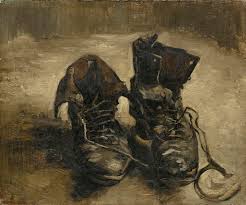
Aristotle uses art (technē) primarily as a contrast to nature (physis) when explaining principles of change, causation, and teleology (purpose/end-directedness). Nature has an internal principle of motion and rest, while art has an external one (the craftsman’s knowledge and skill). Key passages appear in Physics Book II:
In Book II, Chapter 1 Aristotle distinguishes natural things (e.g., animals, plants, elements like earth/fire) from artifacts. A bed or coat as a product of art has no innate impulse to change on its own—only its material (wood or fabric) does, insofar as it is natural. He explicitly says: “For the word ‘nature’ is applied to what is according to nature and the natural in the same way as ‘art’ is applied to what is artistic or a work of art.”
He notes that we do not call something a “work of art” if it is only potentially (e.g., unshaped wood that could become a bed) but lacks the actual form imposed by art.
In Book II, Chapter 8 he compares how art and nature both operate for an end (telos). Art “partly completes what nature cannot bring to a finish, and partly imitates her.” Examples include house-building or ship-building. If a house were made by nature, it would arise similarly to how art produces it. He also notes that mistakes occur in both art (e.g., a doctor giving the wrong dose) and nature.
Aristotle often uses concrete examples of artifacts, such as:
A statue (bronze as material cause; the sculptor’s art as efficient cause).
A bed, coat, or house.
The art of medicine or ship-building.
These illustrate the four causes (material, formal, efficient, final), which apply to both natural and artificial things. Art helps clarify nature because the two are analogous in many ways (both involve form actualizing matter toward an end), but they differ fundamentally in where the source of change lies.
What Aristotle Means by “Art”
In Aristotle’s terminology, technē is productive knowledge or craft/skill—broadly including what we might call technology, craftsmanship, or applied arts (building, medicine, etc.). It is not limited to “fine art” (which he treats elsewhere, e.g., in the Poetics for tragedy or the Politics/Nicomachean Ethics for music and education). He does not just focus on aesthetic beauty or artistic expression in the Physics; the emphasis is metaphysical and physical: how things come to be and why.
On calling something “nature” or “art,” in “On the Essence and Concept of Φύσις in Aristotle’s Physics B, I” Heidegger comments that not for everything but in the magnificent bird of prey circling we say “Now this is nature,” or of the Van Gogh “This is art.”
That’s a reference to Heidegger’s 1939 essay “On the Essence and Concept of Φύσις in Aristotle’s Physics B, I” (often translated as “On the Essence and Concept of Physis in Aristotle’s Physics B, 1”).In the opening sections of that essay, Heidegger reflects on our ordinary, pre-philosophical use of the words “nature” and “art” (or “a work of art”). He points out that we do not apply these terms indiscriminately or to everything: We do not say of just any random thing “this is nature.”
But when we see a magnificent bird of prey circling high above the forest in its powerful, self-sustained flight, we may spontaneously say: “Now this is nature.”
Similarly, we do not call every painted canvas or crafted object “art,” but standing before a painting by Van Gogh, we may say: “This is art.”
Heidegger uses these examples to highlight how, in everyday language, the words “nature” (φύσις / physis) and “art” (τέχνη / technē) carry a certain emphatic, revelatory force. They point to something that shows itself in a privileged, exemplary way — something that gathers and manifests its own essence more fully or authentically than ordinary things do.
This observation serves as Heidegger’s entry point into Aristotle’s famous distinction in Physics B, 1 (Book II, Chapter 1):Physis (nature): Beings that have the principle (archē) of motion and rest within themselves (e.g., animals, plants, the elements). They emerge, grow, and move from out of themselves.
Technē (art/craft): Beings whose principle of coming-to-be lies outside themselves — in the knowledge and activity of the craftsman (e.g., a bed, a statue, a house). The wood does not “want” to become a bed; the form is imposed from without.
Heidegger is not merely repeating Aristotle’s textbook distinction between natural things and artifacts. He is probing the deeper, more originary sense of φύσις that he believes still echoes faintly in Aristotle but has been covered over by later metaphysics. For Heidegger, φύσις is not just “the set of all natural objects” or “the object of natural science.” It names a fundamental way of being: the self-emerging, self-unfolding, self-abiding presencing of beings — the way something “comes forth into appearance from out of itself.”
The bird of prey circling magnificently exemplifies this: its flight is not imposed externally; it is its own soaring, self-sustained movement. In that moment, φύσις shows itself as such. The Van Gogh painting, by contrast, exemplifies technē (art) in its highest sense for Heidegger: a work that, though produced by human making, can nevertheless open up a world and let truth happen in a way that reveals being. (This ties into his famous discussion of Van Gogh’s peasant shoes in “The Origin of the Work of Art”.)
Heidegger suggests that in these emphatic uses of language (“This is nature” / “This is art”), we are still dimly attuned to something essential that Aristotle was also grappling with: the difference between what moves and appears of itself (φύσις) and what receives its form and appearance from elsewhere (τέχνη). Yet even in Aristotle, Heidegger argues, this originary Greek experience of φύσις as an “emerging-abiding sway” begins to harden into a more technical, metaphysical concept (nature as the totality of beings that move, studied by “physics”).
Our quote captures Heidegger’s phenomenological sensitivity beautifully: he is listening to how language already grants a special status to certain beings, and he uses that to reopen the question of what φύσις genuinely meant for the Greeks — and what it might still mean for us.
Van Gogh’s painting of the worn peasant shoes opens up a world of abject poverty, but as Derrida might note the meaning is deferred because it’s unclear from the painting whether the worn shoes convey a tragic life, or if the shoes are beloved well worn companions in a life the peasant loves?
This captures a central tension in the famous philosophical debate over Van Gogh’s painting of the old shoes (most likely the 1886 A Pair of Shoes in the Van Gogh Museum, or one of the related still lifes from his Paris period).
In “The Origin of the Work of Art” (1935–36), Heidegger presents the worn shoes as a paradigmatic example of how a great work of art sets truth to work. He does not treat the painting as a mere representation or aesthetic object. Instead, he sees it as disclosing a world: “From the dark opening of the worn insides of the shoes the toilsome tread of the worker stares forth; in the stiffly rugged heaviness of the shoes there is the accumulated tenacity of her slow trudge through the far-spreading and ever-uniform furrows of the field swept by a raw wind… This equipment belongs to the earth, and it is protected in the world of the peasant woman.”
For Heidegger, the shoes reveal the reliability (Verlässlichkeit) of equipment: the silent, unquestioned way the peasant woman’s being-in-the-world is sustained by her toil, her connection to the soil (earth), and the protective horizon of her rural existence. The painting does not depict abject misery for Heidegger so much as an authentic, grounded mode of dwelling. The wear on the shoes is not primarily a sign of suffering, but of lived reliability and belonging.
Art historian Meyer Schapiro pushed back sharply in 1968 (“The Still Life as a Personal Object”). He argued, with biographical evidence from Van Gogh’s letters, that these were almost certainly Van Gogh’s own shoes — bought second-hand and worn by the artist himself during long walks in the rain to weather them for the painting. Schapiro reads them as an expression of the painter’s own solitary, anxious, urban-bohemian existence rather than a peasant woman’s world. The worn shoes become a self-portrait of sorts: markers of the artist’s hardship, alienation, and empathy.
This is exactly where Derrida enters in the long, playful, polyphonic text “Restitutions of the Truth in Painting” (in The Truth in Painting, 1978). Derrida does not simply side with Schapiro against Heidegger (though he is sympathetic to some of Schapiro’s points). Instead, he deconstructs the entire debate.
Both Heidegger and Schapiro engage in a kind of restitution — they try to return the shoes to their “rightful owner” (peasant woman vs. the male artist Van Gogh) in order to fix their meaning and extract a stable “truth” from the painting.
Derrida shows how both interpretations are projections. Heidegger projects a nostalgic, earthy, almost mythic peasant world (with gendered and even nationalistic undertones). Schapiro projects the modern, individualistic, suffering artist.
The painting itself withholds or defers any such final attribution. The shoes are detached from any determinate wearer. We cannot be sure whose feet they fit, whether they form a true “pair” (Derrida famously plays with the possibility of two left shoes or ghostly detachment), or what affective valence the wear carries.
The meaning is structurally deferred (différance). The worn leather can equally support two incompatible yet co-present interpretations:
Tragic/abject. The shoes testify to grinding poverty, endless labor, cold damp fields, exhaustion — a life of hardship barely endured.
Affectionate/belonging: The shoes are “well-worn companions,” shaped intimately to the feet through years of use, bearing the traces of a life accepted, even loved, in its rhythmic toil and rootedness. They speak of reliability, care, and quiet dwelling rather than pure misery.
The painting does not resolve this ambiguity; it holds it open. The “truth” of the work is not a hidden content we can extract and assign to a subject (peasant or artist), but the very event of unconcealment that simultaneously reveals and conceals. Derrida radicalizes this by suggesting that any attempt to pin the shoes down (to a gender, a class, a biography, or a single emotional tone) repeats a metaphysical desire for presence and ownership that the work of art disrupts.
In short, Heidegger sees the shoes opening a coherent world. Derrida (and our reading) emphasizes that this opening is inherently unstable — the meaning slips, multiplies, and defers. The worn shoes can evoke both abject poverty and beloved companionship without the painting adjudicating between them. That undecidability is not a failure of the artwork but part of its power. This debate remains one of the richest intersections of 20th-century philosophy and art theory. The Différance matrix has as its core 5 moments. To use Heidegger’s example above, 1 the circling bird of prey is Nature personified, 2 while nature is merely present with the bird sitting on a branch preening itself, and 3 deficient in the old lame bird struggling to walk. 4 Conversely, for someone else the circling bird of prey may appear “as” horrific for the brutality it is about to enact, and 5 the old bird venerated as embodying the delicateness and fragility and wisdom of nature. The first 3 co-determine one another (e.g., the notion of “present” above is fundamentally vague until contrasted with the exemplary and deficient cases), while the fourth and fifth moments destabilize the entire system.