



(3) Some thoughts on my History Valley Podcast with Jacob Berman Presentation: Who Killed Jesus?
Mark presents a satirical view of Jesus and his world. With Mark’s Gospel, Mark does numerous things lampooning Jesus and his world, like having Jesus predict the apocalypse and his return during the listeners’ generation, though by Mark’s time that never happened. He had the absurdity of Jesus repeatedly explaining his resurrection/crucifixion to his disciples, but they never understood though they had 1-3 years to ask questions to clarify. This makes sense if it was well known Jesus’ followers were armed and got violent at the arrest, as though it was unknown at the time that Jesus was supposed to die. Jesus says faith can move mountains but doesn’t prove this; etc.
There is perhaps nothing more satirical in the gospels than the portrayal of Jesus’ trial by the Jewish elite, where numerous transgressions of Jewish tradition and laws are circumvented with convenient loopholes, much like we see modern lawyers do. One of Satan’s temptations in Matthew has Satan manipulating the letter of the law and ignoring the spirit of the law.
Hamilton argues:
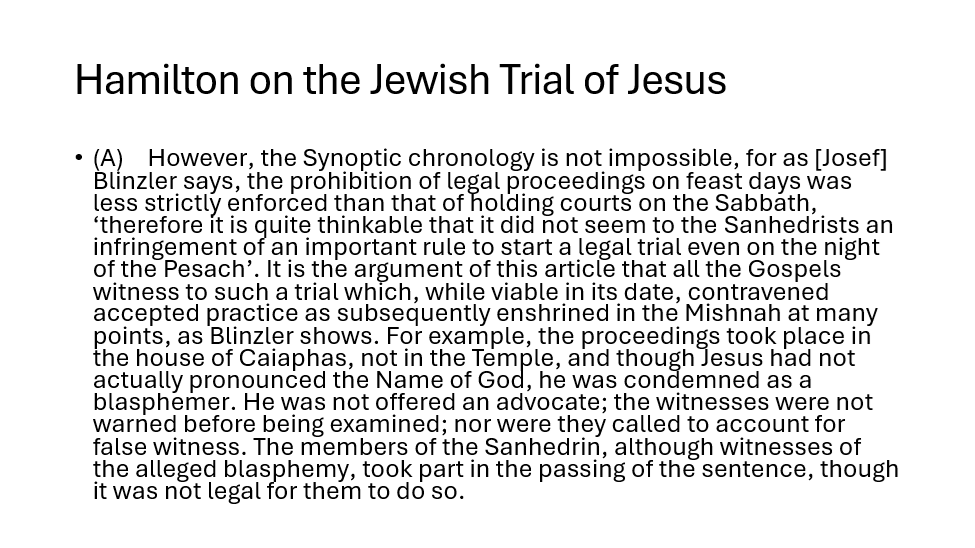
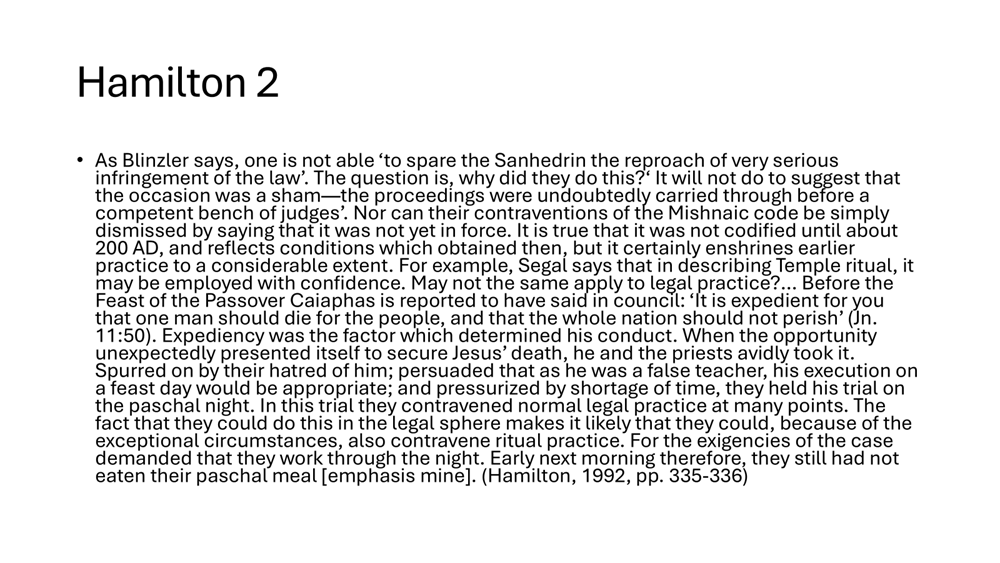
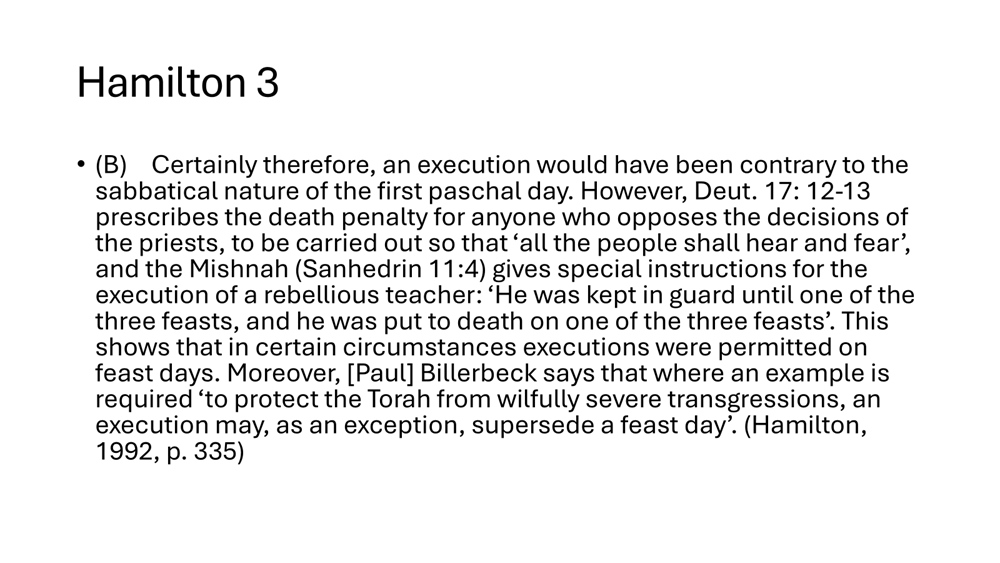
Once we see Mark is amplifying the corruptness of the Jewish elite for satirical effect, we can see how Jesus was an historical figure in this kind of literary situation. Likewise, in one of the most famous satires of antiquity, Aristophanes satirizes Socrates in Clouds (first performed 423 BCE) by deliberately changing and amplifying his traits, conflating him with sophists and turning him into a ridiculous caricature.
The historical Socrates (as portrayed in Plato and Xenophon) did not charge fees for teaching, ran no formal school, rejected sophistic rhetoric aimed at “making the weaker argument the stronger,” and focused primarily on ethical inquiry rather than natural philosophy or absurd physical experiments. In the play, however, Aristophanes distorts this into a sophist-like figure who:
- Runs the “Phrontisterion” or “Thinkery” (a comic “school” where students learn deceptive argumentation).
- Hangs suspended in a basket to “contemplate the air” and engage in silly scientific inquiries (e.g., measuring how many times a flea jumps its own leg length, or pondering a gnat’s anatomy).
- Worships the Clouds as new deities (replacing traditional gods, implying impiety or atheism).
- Teaches students to twist words, evade debts, and justify immorality.
These exaggerations and grotesque distortions (visual gags like students staring at the ground with “bums in the air,” verbal mumbo-jumbo) are not meant to be a realistic portrait but a symbolic target to ridicule the trendy intellectualism, sophistry, and “modern” education Aristophanes saw as corrupting Athens. Scholars note this as an “unfair” caricature—Socrates himself reportedly resented it (per Plato’s Apology)—but it’s classic satire: close enough to recognizable traits for the audience to connect it, yet wildly amplified for humor and moral point.
Aristophanes also satirizes Athenian society and the minor characters who interact with (or are influenced by) Socrates. The play’s deeper target often shifts from Socrates himself to the ordinary Athenians who eagerly (and greedily) embrace or are corrupted by his “teachings.”
The protagonist Strepsiades (an old, crude, debt-ridden farmer who marries “above his station”) is the prime example: a stand-in for the average middle-aged Athenian male. Desperate to cheat his creditors, he enrolls in the Thinkery, learns sophistic tricks, and sends his son Phidippides instead. Phidippides then uses the new rhetoric to “prove” it’s right to beat his father—illustrating the breakdown of family respect, traditional values, and filial piety. This implicates society at large: the audience laughs at Strepsiades’ self-serving opportunism but is meant to recognize their own vulnerability to novelty, greed, and linguistic manipulation in a litigious, imperialistic Athens amid the Peloponnesian War.
Other elements amplify the societal critique:
- The chorus of Clouds (personified as seductive, shape-shifting new ideas) initially aids the sophistry but ultimately helps burn the Thinkery, warning of self-destruction.
- The debate between Just Discourse (traditional morality, old education) and Unjust Discourse (new sophistry) mocks both extremes but shows how language itself is corrupted, eroding shared values.
- Minor figures like creditors and the students highlight greed, arrogance, and the emptiness of “modern” morals.
The ending—Strepsiades torching the school in regret—reinforces the satire’s moral purpose: these intellectual fads and societal weaknesses (self-interest over tradition) are dangerous and corrigible, not inevitable. Aristophanes uses Socrates as the entry-point joke but widens the lens to critique the audience’s own complicity.
In short, Clouds is a layered comedy: Socrates is the exaggerated butt of the jokes, but the real satirical sting is on the society that produces, seeks out, and suffers from such figures. This blend of personal caricature and cultural critique is what makes Aristophanes’ work enduring. Can you see how this resonates with the gospels?
Update: My podcast appearance went well. So far there are 1.5K views on the lower quality stream and 1.9K views on the higher quality stream. It was really fun to argue. There are some scholars out there called “mythicists” who think Jesus never existed but was originally a mythical God like Zeus or Thor. I tried to argue in the podcast that the historical evidence points to the Jewish ruling class being responsible for Jesus’ death, which seems to best fit the evidence. Of course, this is not antisemitism as there were many different kinds of Jewish groups in Jesus’s society, and it was just one of these small groups that were responsible. My main interest is in arguing against mythicism. If humans killed Jesus, he wasn’t a mythical god who was never on earth.