

(1) Some thoughts on my History Valley Podcast with Jacob Berman Presentation: Jesus and John the Baptist
It has long been known that the gospels have to some extent appropriated the famous figure John the Baptist and repurposed him for Christians purposes to note that while John is the greatest among men, the newly developed Christian community was greater: In Matthew 11:11, Jesus declares that among those born of women, no one is greater than John the Baptist, yet the least in the kingdom of heaven is greater than he. This paradoxical statement highlights John’s supreme role as the final Old Testament prophet and forerunner to the Messiah, contrasted with the new spiritual standing of believers.
John is repurposed as the new and greater Elijah to make the point Jesus is greater still as the new and greater Elisha, Elijah’s successor and superior. Mark says: “The beginning of the gospel of Jesus Christ, as it is written in the prophets.” Mark immediately interprets John the Baptist as a forerunner of the Messiah (a la Elijah in II Kings 1:8). Mark then clothes John similar to Elijah (Mark 1:6. II Kings 1:8.). He then says John ate locusts and wild honey, the food of the wilderness in which Elijah lived (and so on and so on). Price notes “In view of parallels elsewhere between John and Jesus on the one hand and Elijah and Elisha on the other, some (Miller, p. 48) also see in the Jordan baptism and the endowment with the spirit a repetition of 2 Kings 2, where, near the Jordan, Elijah bequeaths a double portion of his own miracle-working spirit to Elisha, who henceforth functions as his successor and superior.”
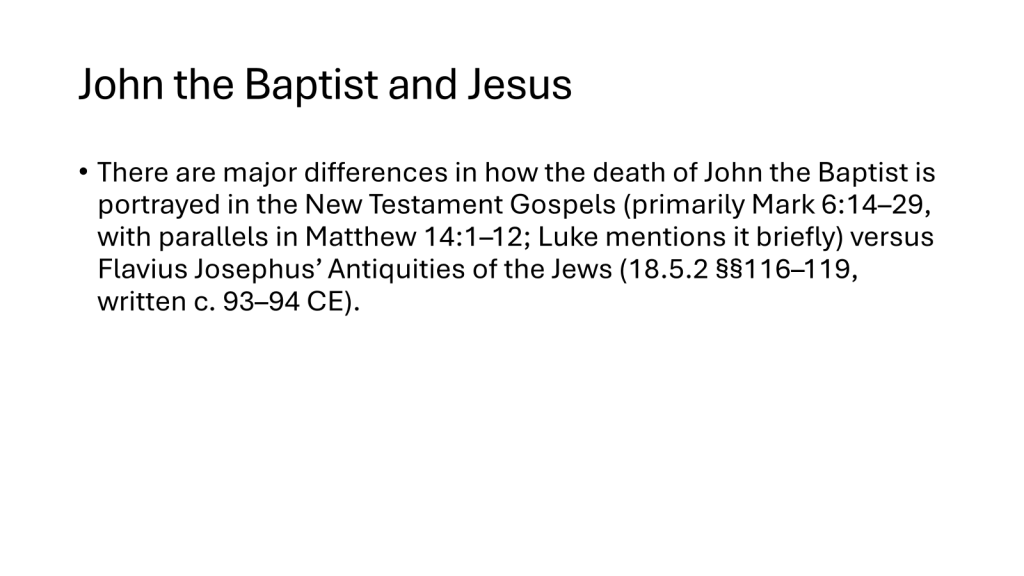
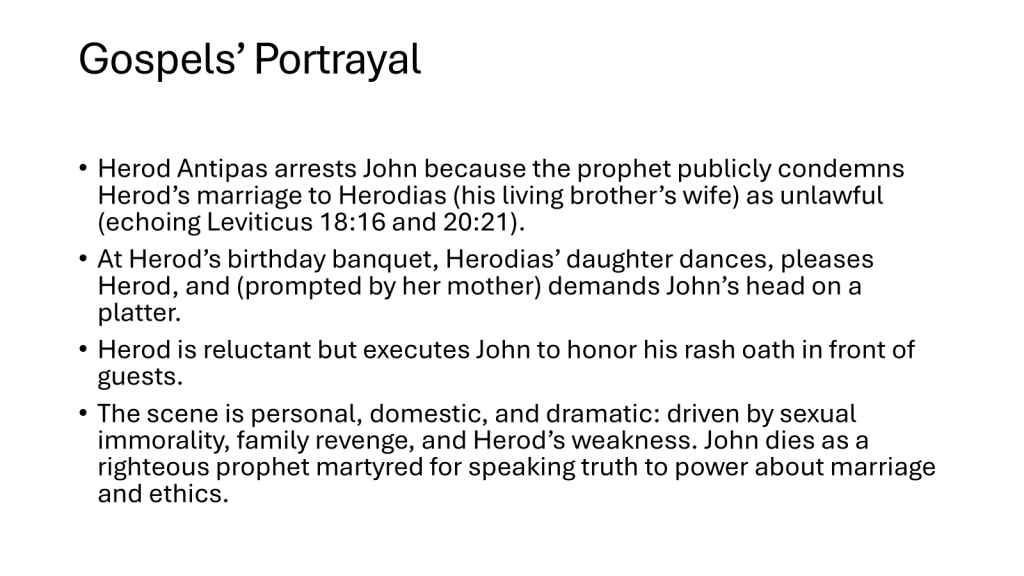
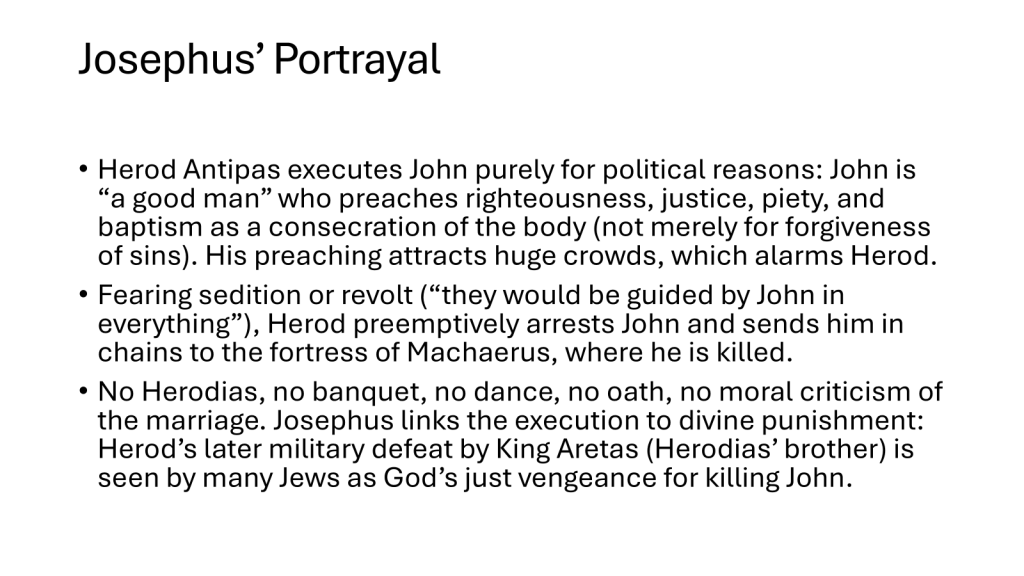
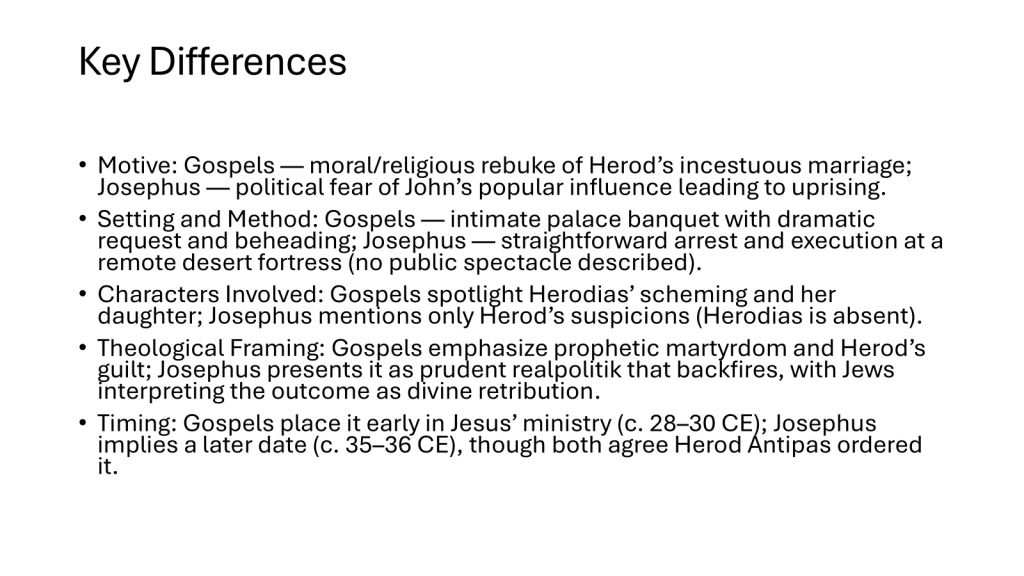
And then, from my presentation:
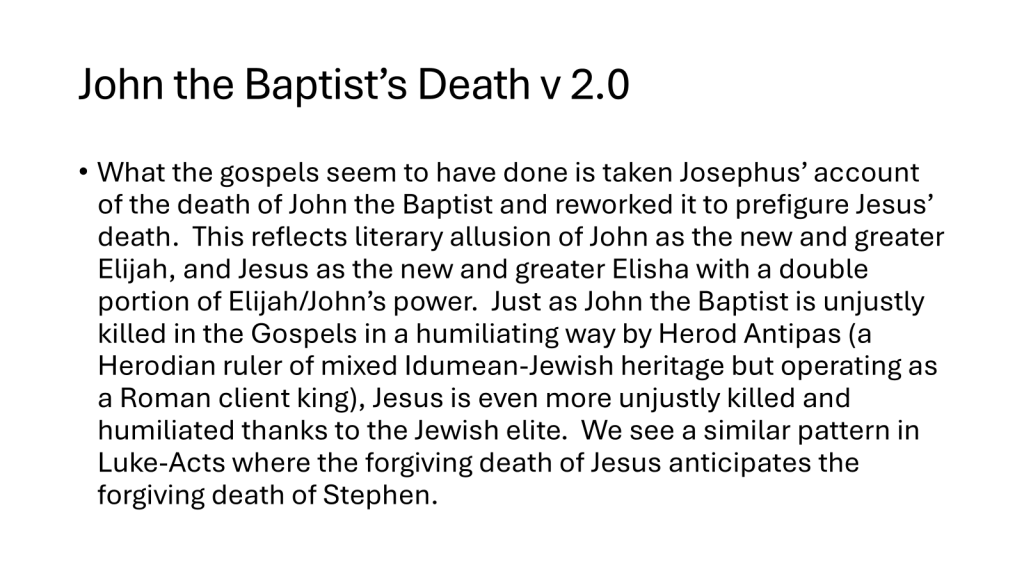
As Bart Ehrman notes, the forgiving death of Jesus in Luke was original to the text but at an early stage edited out by a Christian scribe who couldn’t believe God could forgive the Jews for killing Jesus. We know this because it is a literary parallel with the forgiving death of Stephen in Acts.
Did the historical Jesus know the historical John the Baptist? The connection is purely theological in the gospels, and Berman notes Josephus poses no such connection though he mentions both of them.