



Jacques Derrida and Martin Heidegger on The Philosophy of Death

(Jacques Derrida, wiki)
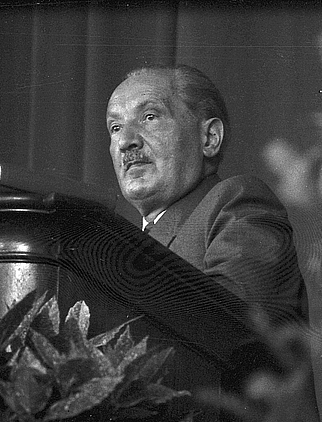
(Martin Heidegger, wiki)
These are my notes for an upcoming study of Heidegger’s Being and Time and Derrida’s response. I focus on philosophy of death and Derrida’s books The Gift of Death, On the Name, and Aporias.
Foreword:
Of course, most people live their lives “as though” the next moment won’t be denied, though it could be. Every time I reach for my glass or leave for work I’m doing so “as though” the activity will be completed, as though the next moment won’t be denied, though it could. The most helpful example of Philosophy and Death I can think of is the spectrum of stances toward death one might take embodied in the ancient notions of Carpe Diem at one pole, and Memento Mori at the other pole. In ancient Greco-Roman philosophy, “carpe diem” (“seize the day”), originating from Horace’s Odes around 23 BCE, represents a stance toward death that emphasizes embracing life’s fleeting pleasures and living fully in the present, given mortality’s inevitability and the uncertainty of tomorrow. This approach aligns with Epicurean influences, urging one to pluck the ripe moments of existence without excessive worry about the future. By contrast, “memento mori” (“remember that you must die”) embodies an opposing perspective, rooted in Stoic thinkers like Seneca, Epictetus, and Marcus Aurelius, as well as earlier philosophers such as Plato, who viewed philosophy itself as a preparation for death. This stance uses the constant awareness of death not to indulge in earthly allure but to cultivate virtue, humility, introspection, and restraint—curbing excesses, focusing on moral living, and sometimes preparing for an afterlife or judgment, as seen in Roman triumphal traditions where a servant reminded victorious generals of their mortality to temper hubris. While the two concepts can overlap or complement each other in motivating purposeful action, they are frequently framed as antithetical: “carpe diem” as empowering and savoring, versus “memento mori” as humbling and resistant to life’s temptations. There is a spectrum of possibilities of stances toward death from the extreme left pole of hedonism which mellows out into tranquil carpe diem and epicureanism of the simple pleasure of meals and friends, through the middle to momento mori and stoicism, and to the far-right pole of rigid asceticism. For example, as a secular activist I write on Historical Christianity and so with the apostle Paul we get the idea that if the dead are not raised we might as well be gluttons and drunks for tomorrow we die (1 Corinthians 15:32), Paul coming from Tarsus, the birthplace of the stoic enlightenment.
Introduction:
A Derridean Interpretation of Christian/Stoic Being-Toward Death in Heidegger’s Being and Time:
(Derridean Heidegger 2/2) Philosophy and Christianity as the Religion of Anxiety
The Posts:
New Blog Post Series: Jacques Derrida and the Philosophy of Death
Jacques Derrida and the Philosophy of Death: The Gift of Death chapter 1
Derrida and Heidegger: Phenomenology vs Deconstruction “Sauf le nom (part 1)”
Jacques Derrida and Martin Heidegger in “Sauf le nom” (part 2)
Jacques Derrida, Friedrich Nietzsche and Søren Kierkegaard in “Sauf le nom” (part 3)
Jacques Derrida and Søren Kierkegaard in “Sauf le nom” (part 4)
Jacques Derrida in “Sauf le nom” (part 5)
Jacques Derrida and Nietzsche in Sauf le nom (part 6): God’s Ass?
Jacques Derrida and Angelus Silesius in Sauf le nom (Conclusion)
Jacques Derrida and Khora (Part 1)
Jacques Derrida and Khora (conclusion)
Jacques Derrida and the Philosophy of Death in Response to Heidegger in “APORIAS” (Part 1)
Jacques Derrida and the Philosophy of Death in Response to Heidegger in “APORIAS” (Part 2)
Jacques Derrida and the Philosophy of Death in Response to Heidegger in “APORIAS” (Part 3)
Jacques Derrida and the Philosophy of Death in Response to Heidegger in “APORIAS” (Part 4)
Jacques Derrida and the Philosophy of Death in Response to Heidegger in “APORIAS” (CONCLUSION)
My Posts on Jacques Derrida’s Interpretation of Martin Heidegger’s Philosophy of Death: Afterword
Derrida, Nietzsche and Heidegger on Concepts and Metaphors:
(Part 1) Derrida and Jacob on Life and Writing
Concluding Post on Derrida’s Life Death Seminar
Related Continental Philosophy Blog Series:
How Johann Christian Friedrich Hölderlin Helped Us Rethink Ancient Thought [Index]
Blogging through Professor Martin Heidegger’s Interpretations of Greek Philosophy
CONCLUSION
FURTHER READING
Related Peer Reviewed Essays on Christian Origins:
The Quest for the Historical Paul (Part D)
John MacDonald | December 24, 2025 | Modern Library
In this final of four articles, John MacDonald focuses in on Paul / John and the Q source, and continues our look at the later nature of Paul, suggesting Paul’s Philippian Christ Hymn and John 1’s incarnation are well explained as homilies about Jesus in the Q source where the loving symbolic leader, and the corporate Son of Man Cynic philosophy community/school (Corporate Son of Man as “holy ones of the Most High” in Daniel 7:18, 22, 27) of aphorisms in Q1, become the judging Son of Man prophet of Q2. Jesus is the new and greater Joshua as exemplarily wise. The name “Jesus” is closely related to the name “Joshua.” Both names derive from the Hebrew name Yehoshua (יהושע), which means “Yahweh is salvation” or “God saves.”
The Quest for the Historical Paul (Part C)
John MacDonald | November 14, 2025 | Modern Library
In this third of four articles, John MacDonald explores how John specialist Hugo Méndez appeals to an emerging consensus that there is an intertextual relationship between Paul’s letters and the Gospel of John. In particular, MacDonald looks at the lateness of the letters of Paul and how they might be appropriating the Gospel of John, such as with the indwelling of Christ’s spirit.
The Quest for the Historical Paul (Part B)
John MacDonald | September 30, 2025 | Modern Library
In this second of four articles, John MacDonald explores how Paul and Jesus are unnecessary to the biblical narrative. With Paul we seem to have a generic idea of a type prophesied in the Old Testament who would bring God’s word to the pagans at the end of the age. Similarly, Jesus (Joshua) seems to be one of a type of then-ubiquitous messianic claimants that tried to relive Joshua’s legacy. As with Plato’s prisoner who escaped the cave, the true issue wasn’t whether a prisoner watching shadows on the wall existed, but the appropriation of the story’s message.
The Quest for the Historical Paul (Part A)
John MacDonald | August 18, 2025 | Modern Library
In this first of four articles, John MacDonald offers the suggestion that the historical Paul did not exist and was a literary creation of Acts in two ways. This then makes the Pauline letters fictive epistles like Seneca’s moral epistles. First, as a theoretical framework MacDonald summarizes Nina Livesey’s recent book arguing to this effect. Next, he uses that foundation to make the case that the converted Paul in Acts is a literary creation as the literary pair of the converted soldier at the cross in Luke—just as the forgiving dying Jesus is paired with the forgiving dying Stephen.
Gospels, Classics, and the Erasure of the Community: A Critical Review Testing the Hypothesis of Robyn Faith Walsh’s The Origins of Early Christian Literature, Part C
John MacDonald | August 3, 2024 | Modern Library
In Part C of a three-part critical review of Robyn Faith Walsh’s The Origins of Early Christian Literature: Contextualizing the New Testament within Greco-Roman Literary Culture, John MacDonald provides a literary application and defense of Walsh’s hypothesis that the New Testament is not, as is usually thought, the product of literate spokespersons conveying the oral tradition of their community, but rather is birthed out of networks of elite Greco-Roman-Jewish writers in dialogue with one another, not out of downtrodden illiterate peasants. MacDonald aims to show that Walsh’s approach makes good sense of the evidence, such as pervasive intertextual haggadic midrash (Jewish) and mimesis (Greek) going on in writing the Gospels, which seems less likely on the “oral tradition of the community” hypothesis. Walsh’s critique of the community oral tradition model is important because that model is what bridges the gap from the opaque period of Jesus’ life and death in the 30s through Paul (who is silent on the details of Jesus’ life) to the destruction of the Temple in the 70s, when Mark’s gospel appears. A few bare details aside, without this chain of sources, reconstruction of the events of Jesus’ life is essentially impossible. In this third article, MacDonald takes up the question of Paul and shows how Paul thinks of Jesus as the law incarnate/embodied/personified, and how this is rooted in ancient philosophy as well as Jewish thought.
Gospels, Classics, and the Erasure of the Community: A Critical Review Testing the Hypothesis of Robyn Faith Walsh’s The Origins of Early Christian Literature, Part B
John MacDonald | June 17, 2024 | Modern Library
In Part B of a three-part critical review of Robyn Faith Walsh’s The Origins of Early Christian Literature: Contextualizing the New Testament within Greco-Roman Literary Culture, John MacDonald provides a literary application and defense of Walsh’s hypothesis that the Gospels are not, as is usually thought, the product of literate spokespersons conveying the oral tradition of their community, but rather are birthed out of networks of elite Greco-Roman-Jewish writers in dialogue with one another, not downtrodden illiterate peasants. MacDonald aims to show that Walsh’s approach makes good sense of the evidence, such as pervasive intertextual haggadic midrash (Jewish) and mimesis (Greek) going on in writing the Gospels, which seems less likely on the “oral tradition of the community” hypothesis. Walsh’s critique of the community oral tradition model is important because that model is what bridges the gap from the opaque period of Jesus’ life and death in the 30s through Paul (who is silent on the details of Jesus’ life) to the destruction of the Temple in the 70s, when Mark’s gospel appears. A few bare details aside, without this chain of sources, reconstruction of the events of Jesus’ life is essentially impossible. In this second article, MacDonald shows how the narrative of the arrest and death of Jesus serves a theological agenda, not a historical one. Moreover, MacDonald addresses the problematic nature of the hypothetical lost Q source (the material common to Matthew and Luke that did not come from Mark), such as how McGrath’s attempt to derive the relationship between John the Baptist and Jesus from Q is flawed.
Gospels, Classics, and the Erasure of the Community: A Critical Review Testing the Hypothesis of Robyn Faith Walsh’s The Origins of Early Christian Literature, Part A
John MacDonald | May 17, 2024 | Modern Library
In Part A of a three-part critical review of Robyn Faith Walsh’s The Origins of Early Christian Literature: Contextualizing the New Testament within Greco-Roman Literary Culture, John MacDonald provides a literary application and defense of Walsh’s hypothesis that the Gospels are not, as is usually thought, the product of literate spokespersons conveying the oral tradition of their community, but rather are birthed out of networks of elite Greco-Roman-Jewish writers in dialogue with one another, not downtrodden illiterate peasants. MacDonald aims to show that Walsh’s approach makes good sense of the evidence, such as pervasive intertextual haggadic midrash (Jewish) and mimesis (Greek) going on in writing the Gospels, which seems less likely on the “oral tradition of the community” hypothesis. Walsh’s critique of the community oral tradition model is important because that model is what bridges the gap from the opaque period of Jesus’ life and death in the 30s through Paul (who is silent on the details of Jesus’ life) to the destruction of the Temple in the 70s, when Mark’s gospel appears. A few bare details aside, without this chain of sources, reconstruction of the events of Jesus’ life is essentially impossible.
Jesus Mythicism: Moral Influence vs. Vicarious Atonement—and Other Problems
John MacDonald | December 31, 2022 | Modern Library
In this article John MacDonald examines the Christ myth theory and its difficulties. A number of flaws are pointed out with the theory. One focus is the moral influence interpretation of Jesus’ death, as opposed to the penal substitution/sin debt model that mythicism demands. Learning the Jesus story is imputing guilt, the opposite of Aristotelian purging catharsis. This is a substantial problem for mythicism. A celestial Christ who was never on Earth and was killed in outer space by sky demons can’t inspire such guilt, and so mythicism isn’t an effective interpretive model—among other problems. One must ask: Does the kind of theology being produced make more sense from a general historicist framework, or a mythicist one? Jesus’ horrific torture and abuse points to a historical Jesus with immolated goat and scapegoat Yom Kippur theology, rather than a mythical one. There is something about the cross that goes beyond doing away with sin so that man and God can be reconciled.
The Justified Lie by the Johannine Jesus in its Greco-Roman-Jewish Context
John MacDonald | April 17, 2022 | Modern Library
In this article John MacDonald examines the possible lie by Jesus in John 7:8-10. The article begins by providing an analysis of the context of lying and deception in the ancient world. Given this background, it moves on to examine (mainly) the insights of Tyler Smith, Adele Reinhartz, Dennis MacDonald, and Hugo Méndez/Candida Moss about the Fourth Gospel and deception. Here John MacDonald explores the thesis that John’s Jesus does in fact lie, and that this lie is meant to be understood by the inner-circle reader. Jesus lying to his brothers is the method by which he is able to go up and preach to the crowd; the lie leads to belief or makes belief possible.
A Critique of the Penal Substitution Interpretation of the Cross of Christ
John MacDonald | April 8, 2022 | Best of the Library, Modern Library
In this essay, John MacDonald attempts to recover the oldest meaning of the cross of Jesus and that of Jesus’ resurrection in their historical context. The paper argues that penal substitution, the popular conservative evangelical interpretation of the cross, is incorrect, and furthermore that it results in interpretive absurdities when applied to the text/evidence. Penal substitution claims that a just God lacks the ability to forgive, and so requires punishment for sin, where the innocent Jesus was substituted for us sinners and brutally bore the punishment for our sins, wiping our sin debt clean. By contrast, this essay presents a nonpenal substitution participation crucifixion model, where Jesus is understood to be our willing victim as a catalyst for opening our eyes to our hidden “satanic influenced vileness” and for encouraging repentance. The oldest meaning of the resurrection of Jesus will also be shown to be what Jesus’ disciples took to be evidence for overcoming death in a blessed way, and empowering us to live righteously. The cross/resurrection argument will further be contextualized in a Second Temple framework of apocalypticism and demonology/superstition to show that the original meaning of the cross and resurrection is so divorced from most modern Christian frameworks and beliefs that many modern Christian would reject the heart of what their ancient counterpart would hold as fundamental to living a good and holy Christian life. The upshot is that the usual modern conservative interpretations of the cross and resurrection bear no, or at least merely superficial, relation to the original ancient ones.